How Do You Keep Gym Essentials Organized?
Last Updated: October 28, 2026
Quick Summary
Keep gym essentials organized by first emptying your bag to take a full inventory, then packing a short, repeatable checklist in a fixed order. Store heavy items low, dry damp gear before repacking, and reset everything with a 15-minute weekly routine.
Empty your bag and gym area completely to see every item you own.
Keep your bag list to items you use every session, checked off each time you pack.
Pack shoes and socks in the bottom compartment so sweat stays away from clean clothes.
Let your gym bag air out fully before repacking, since odor can start within hours.
Run a 15-minute weekly reset on a fixed day to restock, clean, and return equipment.
Table of Contents
Start With a Full Inventory of Your Gym Essentials
Most gym bags end up as a jumble of sweaty socks, loose keys, and a water bottle that leaked last week. Knowing exactly what you own is a good place to start. Before you buy another organizer, take everything out of your bag and your gym area.
Lay each item on the floor and sort it into piles. Shoes go in one pile, clothes in another, and small accessories like wrist wraps, lifting straps, and phone chargers go in a third.
Check your pockets and the bottom of the bag too.
Once you see the full list, you can spot what you use every session and what just takes up space.
Build a Gym Bag Essentials List You Can Actually Stick To
A gym bag essentials list only works if it is short enough to remember. Write down the things you truly use each session, then add a few extras only if you need them weekly.
A simple starting list for most lifters includes:
Training shoes
Socks and a spare pair
Towel
Water bottle
Phone and charger
Keys and wallet
Lifting straps or wrist wraps
Deodorant
Keep the list on your phone or taped inside the bag lid. Check it off every time you pack.
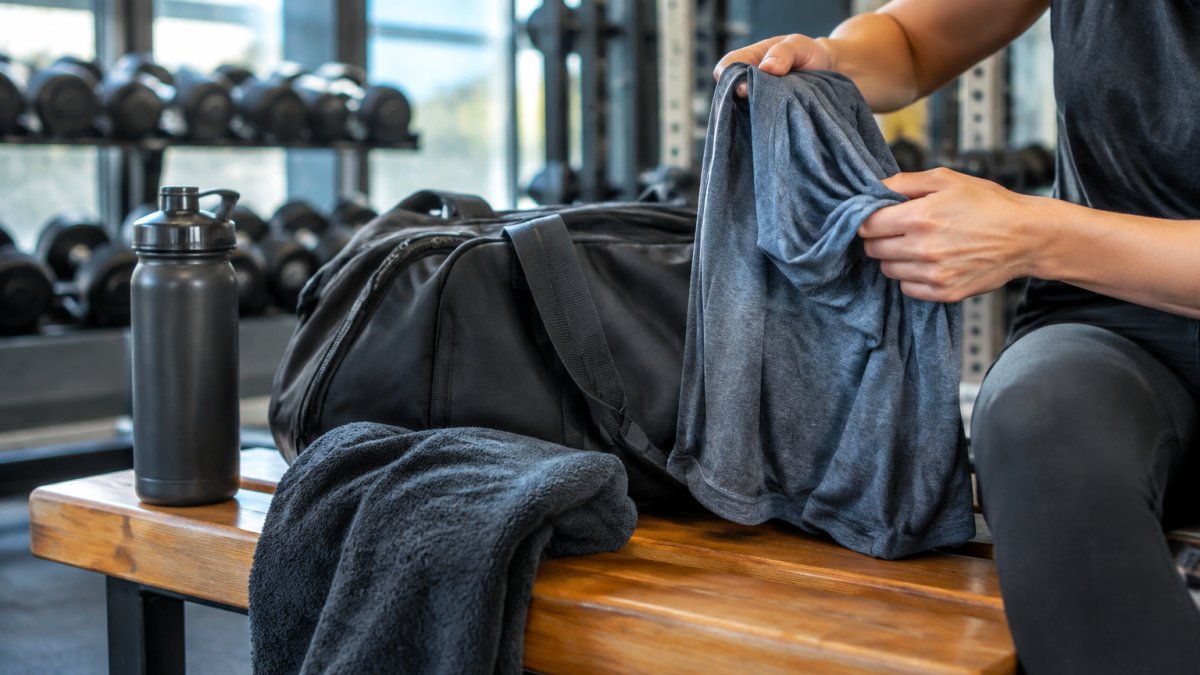
The HYPE Fit Gear Snap Training Bag keeps personal items off the gym floor.
Pack Your Gym Bag With a Repeatable Checklist
A repeatable checklist can help make packing more organized.

Pack in this order:
Shoes and socks go in the bottom compartment so sweat stays away from clean clothes.
Clothes and towel go in the middle.
Water bottle goes in a side pocket where it can't tip.
Phone, keys, and wallet go in a secure pocket.
Small accessories go last, in a zippered pouch.
The SnapFlask features a built-in mounting angle for recording lifts. The Snap Training Bag attaches securely to gym machines.
Watch out: packing heavy items on top can crush delicate gear. Keep heavier items low and near the back.
Set Up Home Storage for Weights, Bands and Accessories
Dumbbells, resistance bands, and small accessories compete for floor space, and clutter builds fast.
Instead of copying a generic list of bins and hooks, build your setup around two variables: how much floor and wall space you have, and how much equipment you own. That decision determines whether you need vertical storage, floor racks, or a hybrid.
Match Storage to Your Space Type
Use this decision path to choose the right system for your room:
Closet or small apartment (under 50 sq ft of gear space): Go vertical. Wall hooks for bands and jump ropes, over-the-door racks for mats, and stackable bins for small accessories. Keep only weekly-use items visible; store spares in under-bed boxes.
Dedicated corner in a room (50-100 sq ft): Combine a small shelf or rack for lighter weights with labeled bins for accessories and a wall-mounted band station. Mark floor space for heavier dumbbells or kettlebells so they stay off walkways.
Garage or dedicated gym (100+ sq ft): Use floor racks for heavier weights, wall hooks or pegboards for bands and straps, and open shelving for towels and accessories. Keep frequently used items within arm's reach of your main lifting area.
Renter-Friendly and No-Drill Options
The mounting method matters:
Use freestanding racks and shelving units that need no wall contact.
Choose removable adhesive hooks rated for the weight you'll hang; check the package rating before hanging bands or ropes.
Use tension rods inside closets for hanging mats or straps.
Repurpose a shoe organizer over a door for small accessories like wrist wraps and lifting straps.
Watch Out Never hang a loaded barbell, plate, or heavy kettlebell from an adhesive hook or a single drywall anchor. Use floor racks or wall studs for anything heavy, and follow the manufacturer's weight rating. A hook that fails mid-session is a safety hazard, not just a mess.
Protect Your Equipment While It's Stored
Storage isn't only about tidiness:
Store resistance bands out of direct sunlight and away from heat, which degrades the rubber over time.
Hang mats vertically or roll them loosely rather than folding, which prevents creases and cracking.
Keep weights off damp concrete floors in garages; a rubber mat or shelf protects both the floor and the equipment.
Leave ventilation space around stored shoes and towels so moisture can escape.
Measure your space and count your equipment by type before you buy anything.
The right storage setup depends on how much space you have and how much equipment you own.
Space type | Recommended storage | Mounting note |
Closet or small apartment (under 50 sq ft) | Wall hooks, over-the-door racks, stackable bins | Keep only weekly-use items visible |
Dedicated corner (50-100 sq ft) | Small shelf or rack, labeled bins, wall band station | Mark floor space for heavier dumbbells |
Garage or dedicated gym (100+ sq ft) | Floor racks, pegboards, open shelving | Keep frequent items within arm's reach |
Renter-friendly setup | Freestanding racks, removable hooks, tension rods | Check adhesive hook weight rating first |
Organize Workout Clothes So Nothing Gets Lost or Smells
Sort clothes by use.
Sort your clothes into these groups:
Training tops and tanks
Leggings and shorts
Sports bras
Socks
Sweatshirts and joggers
Fold shirts and store them in a drawer or on a shelf. Hang sweatshirts and joggers to keep them wrinkle-free. Keep a laundry basket or bag by the door for sweaty gear so it never mixes with clean clothes.
Choose breathable, sweat-wicking fabrics when you buy new gear. They dry faster and smell less between sessions.
Clean and Dry Your Gym Bag to Prevent Odor
A gym bag holds sweat, moisture, and bacteria. Without regular cleaning, odor builds quickly. A simple cleaning routine keeps your bag fresh.
Try this routine once a week:
Empty the bag completely.
Remove any damp towels or clothes and wash them.
Wipe the inside with a damp cloth and mild soap.
Let the bag air out with the main compartment open for several hours.
Check the bottom for leftover moisture before repacking.
A common mistake is packing a bag while it is still damp. Odor can start within hours, so let it dry fully first.
Watch out: never use harsh chemicals on the bag's fabric or zippers, as they can wear down the material over time.
Book a Weekly Reset Routine to Keep Everything in Place
A reset routine keeps your system working over time. Without one, bags and shelves slowly drift back into disorder. A short weekly reset takes about 15 minutes and is the maintenance layer most organization guides skip.
The 15-Minute Weekly Reset Checklist
Work through these steps in order on a fixed day, such as Sunday evening:
Empty and clean your gym bag. Shake out crumbs and grit, wipe the inside with a damp cloth, and leave it open to air dry.
Run a load of gym laundry. Wash damp towels, socks, and training clothes so they don't sit in the bag or hamper all week.
Restock your essentials list. Check each item on your bag list and replace anything missing or empty, such as deodorant, water bottle, or spare socks.
Return equipment to its designated spot. Put bands back on hooks, weights on the rack, and accessories in labeled bins.
Clear one item that no longer fits your routine. Remove a piece of gear you haven't used in a month and store it elsewhere or donate it.
Set a recurring phone reminder for the same day and time each week. Consistency matters more than perfection; a small, regular reset keeps your gym essentials organized for the long run.
Daily Micro-Habits That Prevent Buildup
Small habits can help keep clutter from accumulating between resets:
Unpack damp clothes and towels the same day you train.
Put each item back in its spot immediately after use rather than setting it down "for now."
Wipe down equipment after use and let it dry before storage.
Keep a small laundry bag in your gym bag for sweaty items so clean and used clothing never mix.
A Monthly Deep-Clean and Safety Check
Once a month, extend the reset by 20-30 minutes:
Wash the gym bag inside and out, including straps and zippers, and let it dry fully.
Check wall hooks, racks, and anchors for looseness or wear; tighten or replace anything that moves.
Inspect resistance bands for nicks or thinning, and replace damaged bands before they snap.
Wipe down weights, handles, and mats to remove sweat and chalk buildup.
Frequently Asked Questions
How do I organize my gym bag?
Pack the bag the night before, so you can grab it and go. Empty it weekly.
How do I keep gym clothes and shoes separate in my bag?
Use a ventilated shoe bag or a separate compartment for shoes, since they carry dirt and moisture that can transfer to clothing. Keep clean workout clothes rolled or folded in a packing cube or zip pouch. Store dirty clothes in a waterproof or mesh bag so they dry out rather than sitting in the main compartment. Separating these items keeps your fresh clothes from absorbing odor and grime.
How do I keep my gym bag from smelling?
Remove sweaty clothes and towels as soon as you get home, and hang or spread them to dry. Leave the bag open to air out between sessions. Wipe down the interior with a damp cloth and mild soap once a week, and let it dry fully before closing. Avoid leaving wet items inside overnight, because trapped moisture is the main source of odor.
What is the best way to store workout equipment in a small space?
Use vertical storage first: wall-mounted hooks for resistance bands and jump ropes, and a rack or cubby for smaller accessories. Store dumbbells and weights on a low shelf or in a sturdy bin near the floor. Keep frequently used items at eye level and move occasional-use gear higher or under a bed. Measure your space before buying storage so pieces fit the footprint you have.
Get started with HYPE Fit Gear and keep your training kit where it belongs. The Snap Training Bag keeps your items off the gym floor, the SnapFlask mounts your phone for recording lifts, and bundle options help you save. GET THE GEAR.
Comments