9 Best Compact Training Bags for Gym and Running in 2026
Last Updated: November 1, 2026
Quick Summary
The best compact training bags for gym and running depend on fit, organization, and carry format. For running, a backpack with a sternum strap and side compression is more stable than a duffel, while a dedicated shoe compartment keeps wet and dirty gear apart from your phone and keys.
Pack your realistic session kit before buying; if it fits without strain, the bag size is right.
A 15-25L bag fits shoes, a change of clothes, a small towel, and a bottle for one session.
For running, pick a backpack with a sternum strap and side compression straps over a duffel.
Test a loaded bag by walking, jogging 200 meters, and doing squats to check for bounce and strap slip.
Empty sweaty gear right after training and let compartments air out to prevent odor.
Table of Contents
Compact training bags have become a staple for gym-goers who run to the gym or carry gear between work and workouts, and choosing the right one comes down to fit, organization, and how much you actually need to carry. This guide breaks down compact training bags for gym and running, based on the product information we reviewed. What matters most: a bag that keeps shoes and wet gear separate from your phone and keys, and that stays stable on your back when you run.
How We Evaluated These Compact Training Bags
We looked at each bag through the lens of a gym-goer who also runs or commutes on foot. Criteria were capacity, compartment layout, carry format (duffel versus backpack), and whether the published description suggested it would hold up for running. Where a reviewer singled out a feature, such as a shoe compartment or pocket layout, we weighted it heavily.
Confirm current pricing and sizing on each brand's site before you buy.
Quick Comparison: Compact Training Bags at a Glance
Bag | Format | Standout Feature | Best For |
Nike Utility Power 2.0 Training Duffel | Duffel | Organized layout, under $100 | Budget buyers |
Aer Gym Duffel 3 | Duffel | Dedicated shoe compartment | Keeping shoes separate |
FocusGear Ultimate Gym Bag 2.0 | Gym bag | Pocket organization, low price | Pocket lovers on a budget |
GoRuck GR1 | Backpack | Recognized overall gym-bag pick | Hands-free carrying |
Chrome Barrage Cargo Backpack | Backpack | Do-it-all versatility | Commuters |
Lululemon 2-in-1 Travel Duffle Backpack (45L) | Convertible | 45L, duffel and backpack carry | Gym plus travel |
NOBULL Waxed Canvas Duffelback | Duffelback | Versatile gym-bag pick | Mixed-use buyers |
PopFlex Ella Duffel | Duffel | Best overall duffel in its roundup | General gym use |
Adidas Diablo Duffel | Duffel | Value pick | Value-focused shoppers |
Gym Bag Size Guide: How Many Liters Do You Actually Need?
Liter ratings are a starting point, not a decision. Two 25L bags can hold very different amounts depending on shape, pocket layout, and structure. The more useful question is what your actual session kit looks like, and which size class holds it without strain.
What a typical session kit actually contains
A bare-minimum gym-and-run kit usually includes:
Training shoes (or a second pair if you run in one and lift in another)
A change of clothes: shirt, shorts or leggings, socks, underwear
A small towel
That kit is bulky mostly because of the shoes and the towel. Shoes take up a fixed, awkward volume, and a damp towel does not compress. Everything else is small and flexible.
Capacity by realistic loadout
Use these ranges as a guide, not a guarantee, shape and pocket layout still matter.
10-15L (compact sling or small backpack). Fits a change of clothes, phone, keys, wallet, and a small bottle. Shoes usually have to be worn unless the bag has an external shoe pocket. Best for minimal-gear sessions or running to the gym in your training shoes.
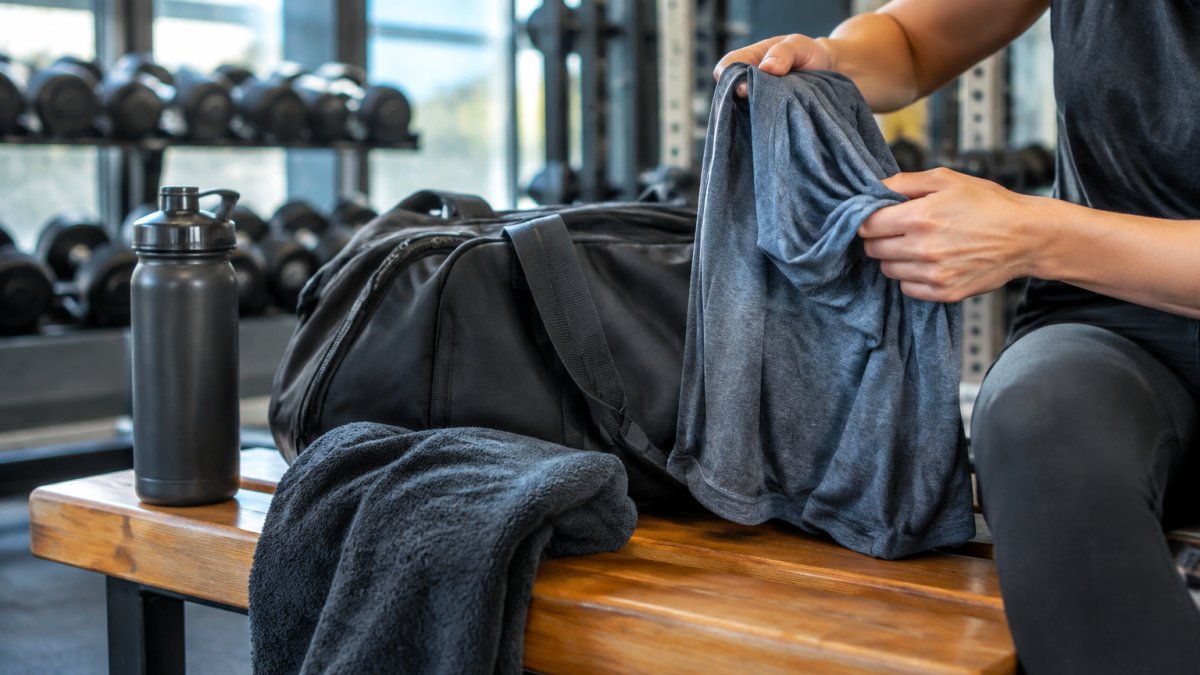
15-25L (small duffel or gym backpack). The sweet spot for a single session: shoes, a change of clothes, a small towel, and a bottle with room to spare. This is the size class most people mean by "compact training bag."
25-35L (mid-size duffel or backpack). Fits the session kit plus a light jacket, a larger towel, or a laptop and work clothes. Good for commuters going straight from gym to office.
Why liter ratings can mislead
A duffel's liter rating counts the main compartment, but a shoe compartment or wet pocket may be separate and not counted the same way across brands.
The practical test is to pack your kit, not to trust the number. If the bag closes without strain and you can still reach your phone and keys without unpacking, the size is right.
Matching size to how you move
Size and carry format interact. A 25L backpack carries more comfortably on a run than a 25L duffel because the load is distributed across two straps. A 40L duffel is fine in a car or locker room but unwieldy on a run. If you run to the gym, bias toward the smaller end and a backpack; if you drive or take transit, a larger duffel gives you more organization.
Key Takeaway Pack your realistic kit before you buy. If shoes, a change of clothes, a towel, and a bottle fit without strain, the bag is the right size, regardless of what the liter rating says.
Gym Backpacks for Running: Fit, Stability and Carry Comfort
Running with a loaded bag is a different problem from carrying one to the squat rack. A duffel on a shoulder strap swings against your hip, and a loosely strapped backpack shifts side to side with each stride. Neither is dangerous on a short jog, but both add wasted motion and chafing that most gym-bag roundups never test for.
What makes a bag stable while running
Four variables matter more than brand or liter rating:
Strap adjustment range. A bag is only as stable as its ability to cinch down past your walking fit. Look for side compression straps and a sternum strap you can tighten one-handed mid-run.
Weight distribution. Heavy items should sit low and against your back, not at the bottom of a swinging duffel. A padded back panel and hip belt transfer load to your hips instead of your shoulders.
Contact points. Two shoulder straps distribute weight better than one, and wide, padded straps reduce collarbone pressure. Narrow straps dig in once the bag passes roughly 5-7 kg (11-15 lb).
How to test a bag for running before you commit
You do not need a lab. Pack the bag with your realistic session kit, shoes, a change of clothes, a towel, a bottle, and your phone and keys, then do this sequence:
Walk 100 meters at a brisk pace. Note whether the bag sways side to side or stays centered.
Jog 200 meters at your easy pace. If the bag bounces vertically more than a couple of centimeters, tighten the compression straps or the sternum strap.
Do 10 bodyweight squats and 10 arm swings. This exposes strap slip and shoulder pressure that a straight jog can hide.
Check the contact points. Look for red marks or damp patches on your shirt where the straps or back panel rub.
If the bag still bounces after tightening, it is a gym-carry bag, not a running bag. That is a legitimate outcome, many compact duffels are designed for the car or locker room, not the sidewalk.
Backpack versus duffel for running
A backpack is the more stable format for running because two straps and a back panel keep the load against your spine. A duffel carried cross-body can work for very short distances if the strap is wide and the load light, but it will swing on any longer run. Convertible bags are a compromise: usually heavier and bulkier than a dedicated running backpack, with conversion hardware that can rub.
Pro Tip If you run to the gym more than twice a week, prioritize a backpack with a sternum strap and side compression over a duffel with more pockets. Pocket organization matters less when the bag is bouncing.
Running-specific carry and safety details
Most compact gym bags are not designed as running packs, so check for these features if you plan to wear one on the move:
Reflective details. A reflective logo, strap, or loop improves visibility on early-morning or evening runs. Common on running-specific packs, rare on gym duffels.
Secure phone pocket. A zippered pocket against your back or on the strap keeps a phone from bouncing and accessible without stopping.
Hydration access. A side bottle pocket you can reach while wearing the bag is useful on longer commutes; a bottle buried in the main compartment is not.

Top Picks: Which Compact Bag Fits Which Athlete
Start with your main use: lifting, running, or commuting. Match the carry format to how you move, and check each bag's current specifications on the brand's site before you buy.
Best Overall Gym Bag
Best for: people who prefer a backpack for carrying gym essentials. Skip if: you need a bag you can confirm is compact enough for running.
Best Value Pick
Best for: budget-conscious gym-goers who want an organized duffel. Skip if: you need confirmed dimensions or running-specific features.
How to Pack a Gym Bag for Running Without Bounce or Bulk
Packing affects how a bag rides as much as the bag itself. Put heavier items, such as shoes, low and close to your back so the weight sits centered.
Pack the phone and keys in a pocket that closes, not loose in the main compartment, so nothing rattles while you run. Cinch straps until the bag sits still on your back, then do a short test run before a full session.
Caring for Your Bag: Odor, Wet Gear and Wear
A gym bag that holds wet clothes will smell within a few days if it stays closed. Empty sweaty gear as soon as you finish training, let compartments air out before zipping them shut, keep wet items away from dry clothes, and wipe the interior when it gets damp.
Check the straps and zippers every few months, since they take the most stress when you run with a loaded bag. Replace a bag once the zippers stop closing cleanly or the straps start to fray.
Pick Your Compact Bag and Gear Up With HYPE Fit Gear
Choosing a compact bag is easier when you know your loadout, your carry style, and how you move. Once you have picked a format, the next step is building the rest of your kit. HYPE Fit Gear makes the Snap Training Bag, which attaches securely to gym machines to keep personal items off the gym floor, and the SnapFlask, which features a built-in mounting angle for recording lifts.
Frequently Asked Questions
What is the best compact bag for the gym and running?
For most people, a compact backpack-style bag in the 20 to 30 liter range works best for both gym sessions and runs, because it keeps weight centered and leaves your hands free. Look for a secure shoe or wet-gear compartment, adjustable chest or sternum straps to limit bounce, and a phone pocket you can reach without unpacking. Check the packed weight and dimensions before you buy, since a bag that feels fine empty can become uncomfortable once loaded with a towel, shoes and a water bottle. Test the fit by jogging a short distance with a realistic load.
What should I look for in a small gym bag?
Start with capacity: a small gym bag should hold a change of clothes, shoes, a towel, a water bottle and your phone without straining the seams. Next, check the layout. A separate shoe compartment keeps sweaty gear away from clean clothes, and a dedicated pocket for keys and a phone saves time at the locker. Materials matter too. Water-resistant fabric and durable zippers handle daily wear better than thin nylon. Finally, confirm the straps are adjustable and comfortable under load, especially if you plan to run with the bag.
Can you run comfortably with a gym bag?
Yes, but only with a bag designed to stay stable while you move. A compact backpack with adjustable straps and a snug fit typically bounces less than a duffel carried over one shoulder. Keep heavy items close to your back and low in the bag, and avoid loose items that shift during strides. If the bag still bounces after adjusting the straps, reduce the load or try a different fit. Running with an unbalanced bag can cause chafing and shoulder fatigue over longer distances.
Are gym backpacks or duffel bags better for running?
Gym backpacks are generally better for running because they distribute weight across both shoulders and keep your arms free. Duffel bags work well for carrying gear to and from the gym by car or public transport, but they tend to swing when carried by hand or on one shoulder. If you plan to run with your bag, prioritize a backpack with a snug fit and a chest strap. If you mostly drive or commute without running, a duffel may offer more open space and easier access.
Comments